



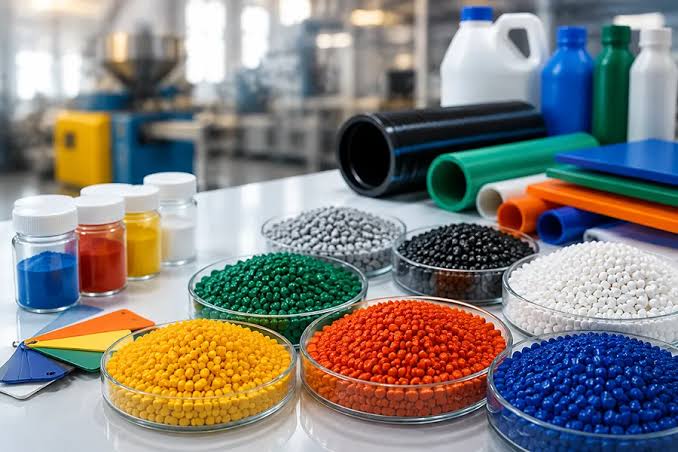
Masterbatch is one of the most essential components in modern plastic manufacturing, yet many procurement managers and production engineers encounter it daily without fully understanding its composition and capabilities. In simple terms, a masterbatch is a concentrated mixture of pigments, additives, or fillers encapsulated within a carrier resin and processed into free-flowing granular pellets. These pellets are added to raw base polymers during plastic processing to impart consistent color, enhance physical properties, or reduce production costs. From food-grade packaging films to automotive exterior parts, masterbatch is the silent workhorse that makes high-quality plastic products possible at scale.
What Is Masterbatch Made Of?
Every masterbatch formulation consists of three core components:
- Active ingredients: Pigments (organic or inorganic), dyes, functional additives, or mineral fillers that deliver the desired color or performance characteristic.
- Carrier resin: A polymer base — typically polyethylene (PE), polypropylene (PP), polystyrene (PS), or ethylene-vinyl acetate (EVA) — that acts as a vehicle, ensuring compatibility with the host polymer during processing.
- Processing aids: Dispersing agents and lubricants that help achieve uniform distribution of the active ingredients throughout the carrier.
The carrier resin is chosen to match the base polymer of the end product. This compatibility is what allows masterbatch to blend seamlessly during extrusion or injection molding, producing a homogeneous final material without streaks, specks, or weak spots.
The Four Main Types of Masterbatch
Color Masterbatch
Color masterbatch delivers uniform, vibrant color to plastic products. Within this category, white masterbatch (formulated with titanium dioxide) provides opacity and brightness for packaging and films, while black masterbatch (using carbon black) adds UV protection, conductivity, and heat resistance for automotive and agricultural applications. Custom color masterbatch allows manufacturers to match brand-specific Pantone shades across production runs.
Additive Masterbatch
Additive masterbatch imparts functional properties without significantly altering color. Common additive masterbatches include:
- UV stabilizers for outdoor UV protection
- Antioxidants to prevent thermal degradation during processing
- Flame retardants for electrical and construction plastics
- Slip and antiblock agents to improve film processing and surface properties
- Antistatic agents to reduce dust attraction and static discharge
Filler Masterbatch
Filler masterbatch incorporates calcium carbonate or talc to reduce material costs and improve stiffness, printability, and surface smoothness. It is widely used in construction materials, woven bags, and thin-wall containers.
Specialty and Effect Masterbatch
These include pearlescent, metallic, marble, and glow-in-the-dark masterbatches used in consumer goods, cosmetics packaging, and high-end product differentiation.
How Masterbatch Is Manufactured
The masterbatch manufacturing process involves precision compounding. Raw materials are accurately weighed, premixed in a high-speed blender, then fed into a twin-screw extruder. Under controlled heat and shear, the pigments and additives are uniformly dispersed into the molten carrier resin. The extruded compound is cooled, pelletized into uniform granules, and subjected to rigorous quality control before packaging.
At Mine Colours, this process is supported by experienced R&D teams who develop custom formulations to meet specific customer requirements — whether that means matching a precise color, optimizing UV resistance for greenhouse films, or engineering an antistatic solution for electronics packaging.
Key Advantages of Using Masterbatch
- Superior dispersion: Pre-dispersed active ingredients eliminate the clumping and inconsistency of raw powder additives.
- Simplified handling: Granules are dust-free, easy to dose, and do not require special ventilation equipment.
- Batch-to-batch consistency: Automated compounding ensures each batch delivers identical color and performance.
- Cost efficiency: Small dosage rates (typically 1–5% of the total formulation) deliver maximum impact with minimum material waste.
- Cleaner production: No airborne pigment dust means a safer, cleaner manufacturing environment.
- Customizable: Formulations can be tailored to specific polymers, processing methods, and end-use requirements.
Looking for a reliable masterbatch manufacturer? Mine Colours offers custom color masterbatch, black and white masterbatch, and plastic additives tailored to your production needs. Contact us to request a sample or get a quote.
Conclusion
Masterbatch is far more than a coloring agent — it is a precision-engineered solution that enables plastic manufacturers to achieve consistent quality, functional performance, and operational efficiency. Whether you need color masterbatch for branded packaging, black masterbatch for UV-resistant automotive parts, or additive masterbatch for specialized applications, choosing the right masterbatch supplier is critical to your production success.