



How Professional Color Matching Services Ensure Consistent Color Across Plastic Production Runs
In plastic manufacturing, color consistency isnt just about aesthetics — it is a critical quality metric that impacts brand identity, customer trust, and production efficiency. Whether you are producing automotive interior parts, consumer packaging, or medical components, every production run must match the approved color standard. Achieving this consistency, however, is far from simple. Resin variations, processing conditions, and pigment behavior can all introduce subtle color shifts. That is where professional color matching services, combined with precision masterbatch technology, make the difference between a rejected batch and a perfect run.
The Science Behind Color Matching in Plastics
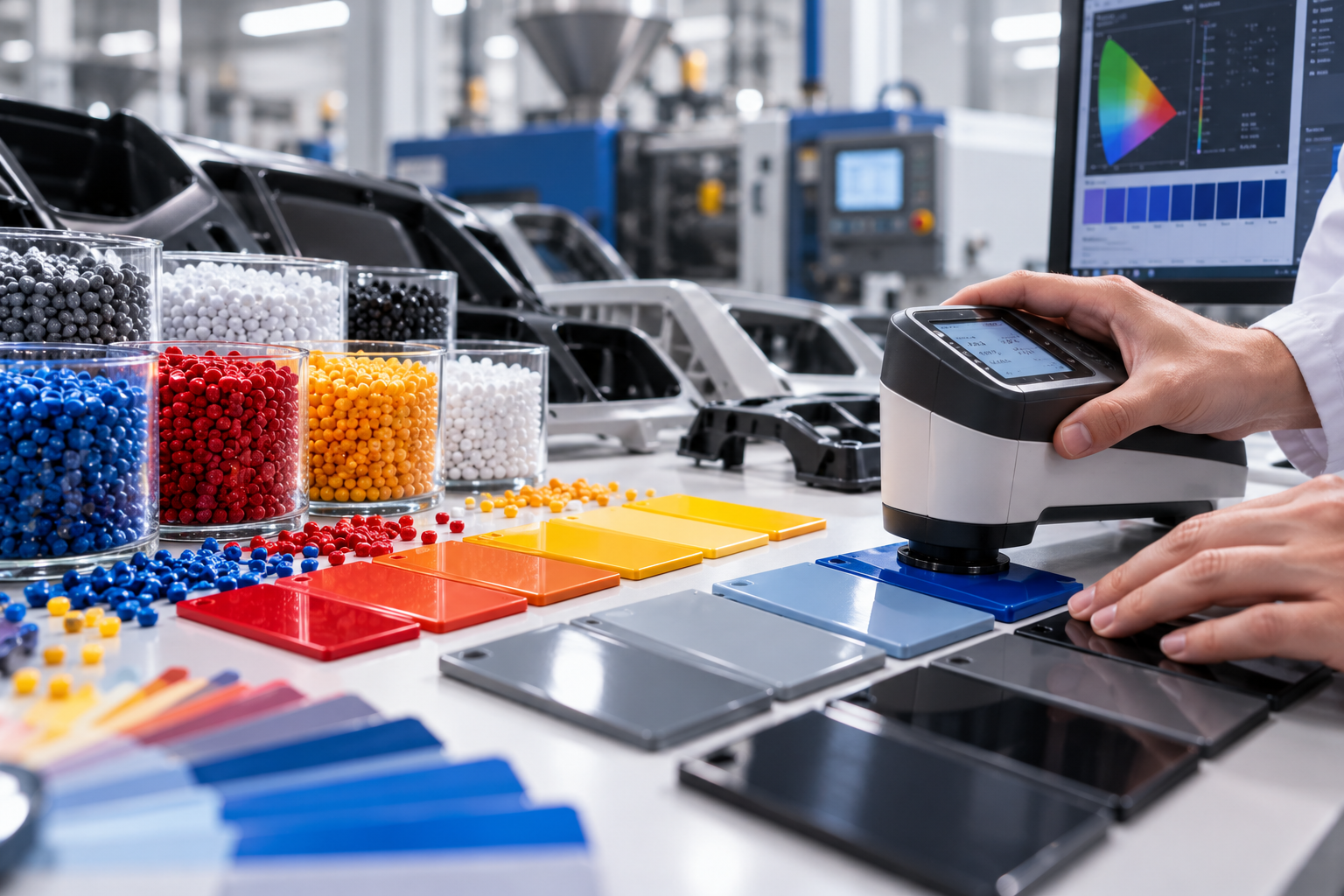
Professional color matching is far more sophisticated than simply mixing pigments until the shade looks right. It begins with defining a precise color target — typically a Pantone, RAL, or custom brand standard. Color formulators then analyze the target using spectrophotometer technology to capture its spectral data. This data, expressed as CIE Lab* values, provides an objective numerical fingerprint of the color.
The formulator selects the appropriate combination of pigments, dyes, and additives based on the base resin type and the end product performance requirements. For example, a color formulation for polypropylene automotive trim will differ significantly from one designed for polyethylene food packaging, even if the target color is identical. The formulation is tested by molding small plaques, measured against the standard, and adjusted until the color difference (ΔE) falls within the specified tolerance.
How Masterbatch Enables Color Precision
Once the lab-perfect formulation is approved, the next challenge is reproducing it consistently at production scale. This is where masterbatch technology excels. As a leading masterbatch manufacturer, Mine Colours produces color masterbatch concentrates where pigments are precisely dispersed within a carrier resin. This approach offers several advantages over raw pigment dosing:
- Uniform dispersion: Masterbatch manufacturing uses controlled blending and dispersion processes that integrate colorants evenly throughout the carrier.
- Repeatable dosing: Because the pigment concentration in masterbatch is consistent, manufacturers can dose accurately using simple metering equipment, reducing human error.
- Cleaner handling: Masterbatch granules eliminate the dust and contamination risks associated with powdered pigments.
- Protected colorants: The carrier resin shields pigments from moisture, heat, and UV during storage, preserving their integrity.
For manufacturers seeking the highest level of color consistency, partnering with a trusted color masterbatch supplier like Mine Colours ensures that every batch of masterbatch matches the original formulation — eliminating the variability that plagues on-site color mixing.
The Role of Spectrophotometers in Color Quality Control
Even the best masterbatch formulation needs robust quality control to ensure consistent results. Spectrophotometers are the industry standard for objective color measurement in plastics manufacturing. Unlike the human eye — which is influenced by lighting conditions, viewing angles, and operator fatigue — spectrophotometers deliver repeatable, numerical data.
These instruments are deployed at multiple stages of production:
- Incoming inspection: Raw materials including masterbatch and resin are checked against standards before production begins.
- Process monitoring: During injection molding or blow molding, inline or at-line measurements detect color shifts caused by temperature or shear variations.
- Final verification: Finished parts are measured to confirm they meet the specified color tolerance.
Benchtop vs. Portable Spectrophotometers
Benchtop spectrophotometers are used in quality labs for high-accuracy measurements and can analyze reflected and transmitted color, as well as properties like opacity and haze. Portable instruments offer flexibility for measuring finished parts on the production floor. Both play an essential role in a comprehensive color control program.
Why Consistent Color Matters for Brand Identity
Color is often the most recognizable element of a brand. In the packaging industry, consumers associate specific shades with product quality and trust. In automotive and electronics, color mismatches between components from different production runs can signal poor quality — even if the functional performance is identical.
A robust color matching program reduces waste (rejected parts, rework, off-spec inventory), shortens production ramp-up time, and strengthens customer relationships. By investing in professional color matching services and high-quality plastic color concentrates, manufacturers protect both their production economics and their brand reputation.
Looking for a reliable masterbatch manufacturer? Mine Colours offers professional color matching services, custom color masterbatch, black & white masterbatch, and plastic additives tailored to your production needs. Contact us to request a sample or get a quote for your next project.