



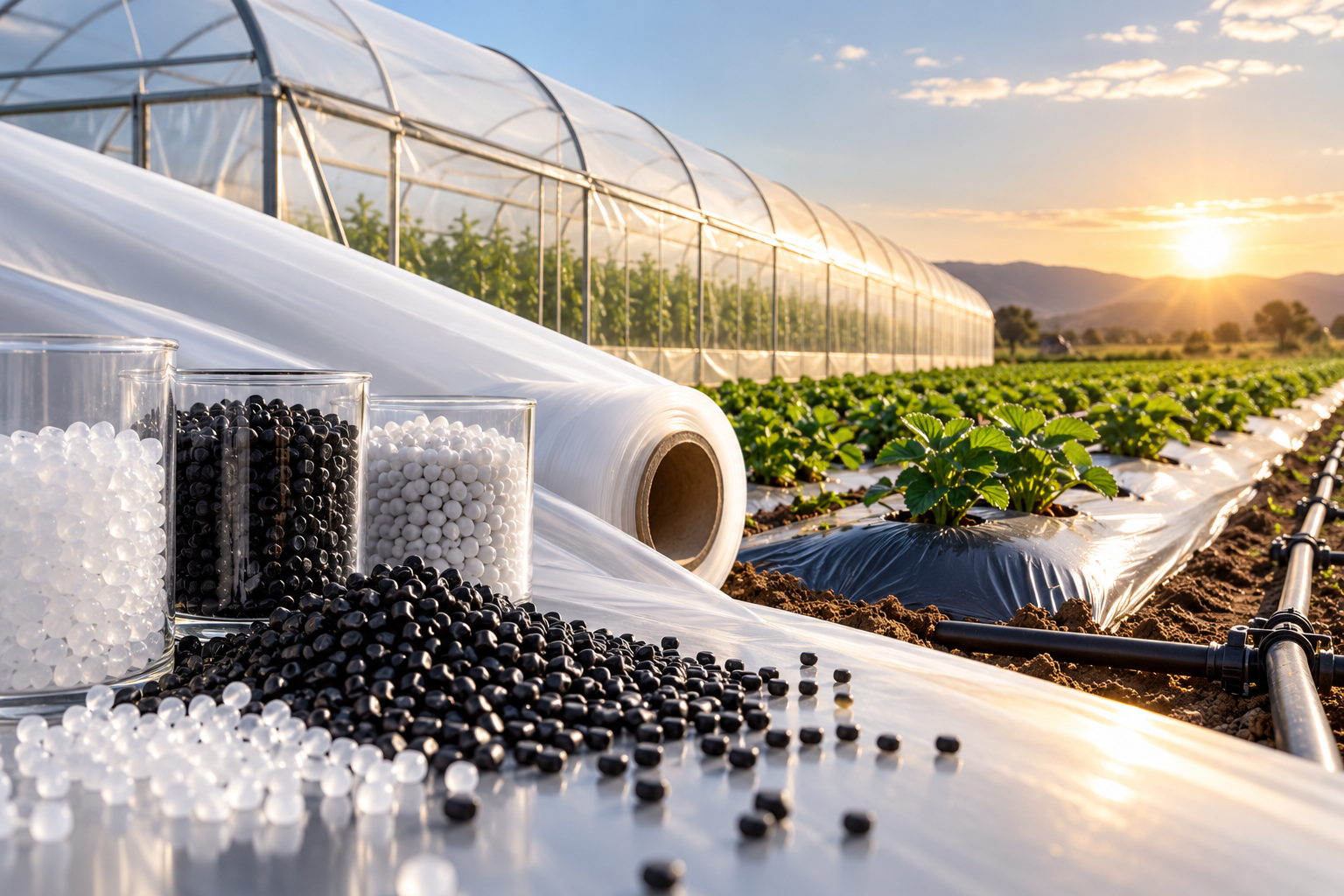
Masterbatch for Agricultural Films: How UV Resistance Extends Durability in the Field
Agricultural plastics play a critical role in modern farming, from greenhouse covers that protect high-value crops to mulch films that improve soil conditions and irrigation pipes that deliver water efficiently. But all these plastic products share one common challenge: relentless exposure to sunlight. Without proper UV stabilization, even the highest-quality polyethylene film can become brittle, discolored, and structurally compromised within a single growing season. This is where UV stabilizer masterbatch for agricultural films becomes essential — a specialized additive solution that dramatically extends the service life and performance of farming plastics.
How UV Masterbatch Protects Agricultural Plastics
UV degradation occurs when ultraviolet radiation from sunlight triggers photo-oxidation within the polymer structure, breaking molecular bonds and creating free radicals. Over time, this process causes the plastic to lose mechanical strength, develop surface cracks, and change color. UV masterbatches counteract this through two primary mechanisms.
UV Absorbers and Hindered Amine Light Stabilizers
UV absorbers (UVA) function like sunscreen for plastic, capturing harmful UV radiation in the 280–400 nm range and converting it into heat energy that dissipates harmlessly. Hindered Amine Light Stabilizers (HALS) work differently — they intercept and neutralize free radicals as they form, effectively halting the chain reaction of photo-degradation. Most high-performance agricultural masterbatches combine both technologies in synergistic blends that provide comprehensive protection across the full UV spectrum.
Advanced formulations such as NOR HALS are specifically engineered to resist deactivation by the sulfur, chlorine, and other chemicals found in common agricultural pesticides. This chemical resistance is critical for greenhouse film UV stabilizer masterbatch applications where films are routinely exposed to fumigants and crop protection products.
The Role of Carrier Resins
UV stabilizers are concentrated within carrier resins like LDPE, LLDPE, or EVA, ensuring even dispersion when added to the base polymer during extrusion. Typical masterbatch dosage rates fall between 5% and 7%, with stabilizer content ranging from 10% to 30% depending on the required service life and geographic UV intensity.
Key Applications Across Agricultural Film Types
Different farming applications demand different levels of UV protection. A single-season mulch film requires a different stabilization strategy than a multi-season greenhouse cover rated for 3 to 5 years of continuous exposure.
Greenhouse Films and Shade Nets
Multi-season greenhouse films are among the most demanding agricultural film UV protection applications. These covers must maintain optical clarity for optimal light transmission, mechanical integrity against wind and hail, and chemical resistance against pesticide exposure — all while enduring 510 kilolangleys or more of total UV radiation over their lifespan. Specialized UV resistant plastic additives enable these films to retain their strength and transparency far longer than unprotected alternatives.
Mulch Films and Silage Wraps
Mulch films lie directly on the soil surface, exposed to sunlight, soil chemicals, and mechanical stress from installation and removal. Black masterbatch with carbon black is frequently used here, as carbon black provides exceptional UV blocking while reinforcing the polymer structure against tearing and punctures. Silage wraps and bale covers face similar demands, requiring UV stability to protect feed quality over extended outdoor storage periods.
How to Select the Right UV Masterbatch Formulation
Selecting the appropriate masterbatch depends on several factors: expected service life, local UV intensity, crop type, and chemical exposure. A masterbatch manufacturer with strong R&D capabilities can customize stabilizer blends to match these variables precisely. Custom compounding allows adjustments to the UVA/HALS ratio, carrier resin compatibility, and antioxidant synergism for combined thermal and oxidative stability during processing.
Working with a supplier that understands the nuances of agricultural film manufacturing — including extrusion parameters, film thickness, and additive dispersion quality — makes a measurable difference in end-product performance. Consistent color, uniform stabilizer distribution, and reliable quality control are all hallmarks of a professional masterbatch manufacturer for agricultural applications.
Conclusion
UV stabilizer masterbatch is not an optional upgrade for agricultural films — it is a requirement for any product expected to perform reliably under full sunlight exposure. From greenhouse covers to irrigation pipes, properly stabilized plastics deliver longer service life, reduced replacement costs, and better protection for the crops they serve. As farming operations continue to expand into regions with intense solar radiation, the demand for advanced UV masterbatch technologies will only grow.
Looking for a reliable masterbatch manufacturer for your agricultural film production? Mine Colours offers custom UV stabilizer masterbatch, color masterbatch, black and white masterbatch, and plastic additives tailored to your specific farming application requirements. Contact us to request a sample or discuss your formulation needs.