



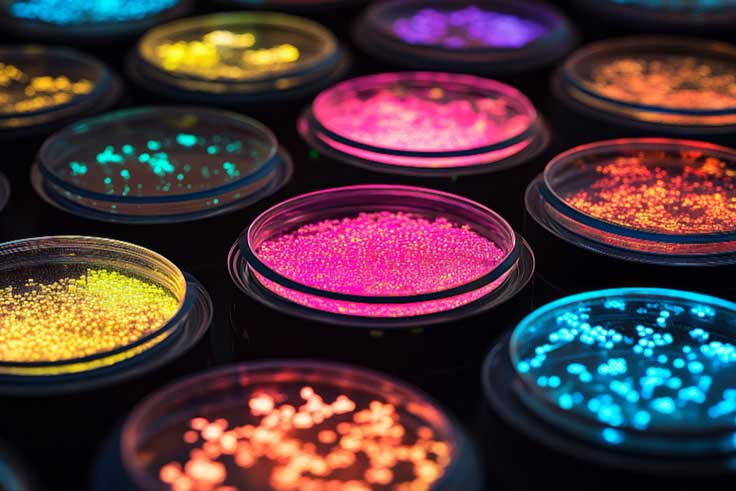
If you work in plastic manufacturing, you have likely heard the term masterbatch. But what exactly is it, and why is it so essential to modern production lines? In simple terms, a masterbatch is a highly concentrated mixture of pigments or additives encapsulated in a carrier resin, formed into solid granules or pellets. When blended with a base polymer during processing, it delivers consistent color or specific functional properties to the final plastic product. This article explains what masterbatch is, how it is manufactured, and why it has become the preferred solution for plastic processors worldwide.
What Is Masterbatch?
A masterbatch is a solid or liquid concentrate of pigments and/or additives, dispersed uniformly within a carrier polymer. It typically comes in pellet or granular form, making it easy to handle, store, and dose. Instead of adding raw pigment powders or liquid additives directly to the polymer—which can be messy, imprecise, and hazardous—manufacturers use masterbatch to achieve precise, repeatable results. Common examples include color masterbatch for vibrant hues, black masterbatch for deep black and UV protection, and white masterbatch for opacity and brightness.
How Masterbatch Is Manufactured
The production of masterbatch involves several carefully controlled steps:
- Weighing and batching: Raw materials—pigments, additives, and carrier resin—are precisely measured according to the formulation.
- Premixing: Ingredients are dry-blended in a high-speed mixer to create a uniform pre-mixture.
- Extrusion: The blend is fed into a twin-screw extruder, where heat and shear forces melt and disperse the components uniformly within the carrier polymer. This high-shear mixing step is critical for achieving optimal dispersion.
- Cooling: The molten compound is cooled through a water bath or air-cooling system.
- Pelletization: Solidified strands are cut into uniform pellets or granules.
- Quality control: Each batch undergoes rigorous testing for color matching, dispersion quality, moisture content, and thermal stability.
At Mine Colours, every step of this process is managed with precision and backed by decades of expertise, ensuring consistent, high-quality masterbatch solutions for manufacturers across North America and beyond.
Types of Masterbatch
Color Masterbatch
Color masterbatch contains concentrated pigments or dyes that impart specific colors to plastic products. It is widely used across industries—from packaging and automotive to agriculture and consumer goods. Black masterbatch, which uses carbon black, offers deep color plus UV resistance. White masterbatch relies on titanium dioxide for opacity and brightness in applications like food-grade packaging.
Additive Masterbatch
Additive masterbatch enhances functional properties. Common examples include UV stabilizer masterbatch for outdoor durability, flame retardant masterbatch for electrical components, antioxidant masterbatch to prevent thermal degradation, slip and anti-block agents for film processing, and antimicrobial masterbatch for medical and food-contact plastics.
Filler Masterbatch
Filler masterbatches incorporate inorganic fillers such as calcium carbonate or talc. Their primary purpose is reducing production costs while improving certain mechanical properties like stiffness and dimensional stability.
Key Benefits of Using Masterbatch in Plastic Manufacturing
Why do plastic manufacturers choose masterbatch over raw additives? The advantages are significant:
- Cleaner and safer handling: Masterbatch eliminates the dust, spillage, and health risks associated with raw pigment powders, creating a cleaner production environment with fewer workplace hazards.
- Precise dosing: The pellet form allows accurate, repeatable dosing with standard feeding equipment, reducing material waste and ensuring consistent quality.
- Superior dispersion: Pre-dispersed pigments and additives eliminate streaking, spotting, and uneven properties in the final product.
- Cost efficiency: High let-down ratios (typically 1–5%) mean a small amount of masterbatch goes a long way, optimizing raw material costs.
- Extended shelf life: Encapsulation in the polymer matrix protects additives from moisture, heat, and UV exposure during storage.
- Process versatility: Masterbatch works with injection molding, extrusion, blow molding, and all major processing methods.
Mine Colours specializes in custom compounding and color matching services, helping manufacturers find the perfect masterbatch formulation for their specific application—whether it is packaging, automotive components, or 3D filament production.
Common Applications Across Industries
Masterbatch is used in virtually every sector of the plastics industry. In packaging, color and white masterbatches create brand-consistent containers and films. The automotive industry relies on black masterbatch for interior and exterior parts requiring UV stability. Agricultural films use UV stabilizer masterbatch to withstand prolonged sun exposure. Flame retardant masterbatches are essential in electrical and electronic housings. Medical-grade masterbatches meet strict purity and compliance standards for devices and packaging. Even the growing 3D filament market benefits from custom masterbatch formulations designed for consistent color and mechanical properties across production runs.
The Future of Masterbatch Technology
The masterbatch industry is evolving rapidly, with sustainability at the forefront. Manufacturers are developing bio-based, biodegradable, and recyclable masterbatch formulations compatible with post-consumer recycled (PCR) resins. NIR-detectable black masterbatches are solving recycling bottlenecks by allowing automated sorting. AI-driven formulation tools are improving batch-to-batch consistency. As a forward-thinking masterbatch manufacturer, Mine Colours stays at the cutting edge of these developments, offering solutions that help customers meet both performance requirements and environmental goals.
Conclusion
Masterbatch is the backbone of modern plastic manufacturing. It delivers consistent color, enhanced functionality, cleaner processing, and cost efficiency in a single, ready-to-use pellet form. Understanding what masterbatch is and how it works helps manufacturers make smarter sourcing decisions. If you are looking for a reliable masterbatch supplier with proven expertise, contact Mine Colours to discuss your next project—from standard black masterbatch to fully custom compounding solutions.